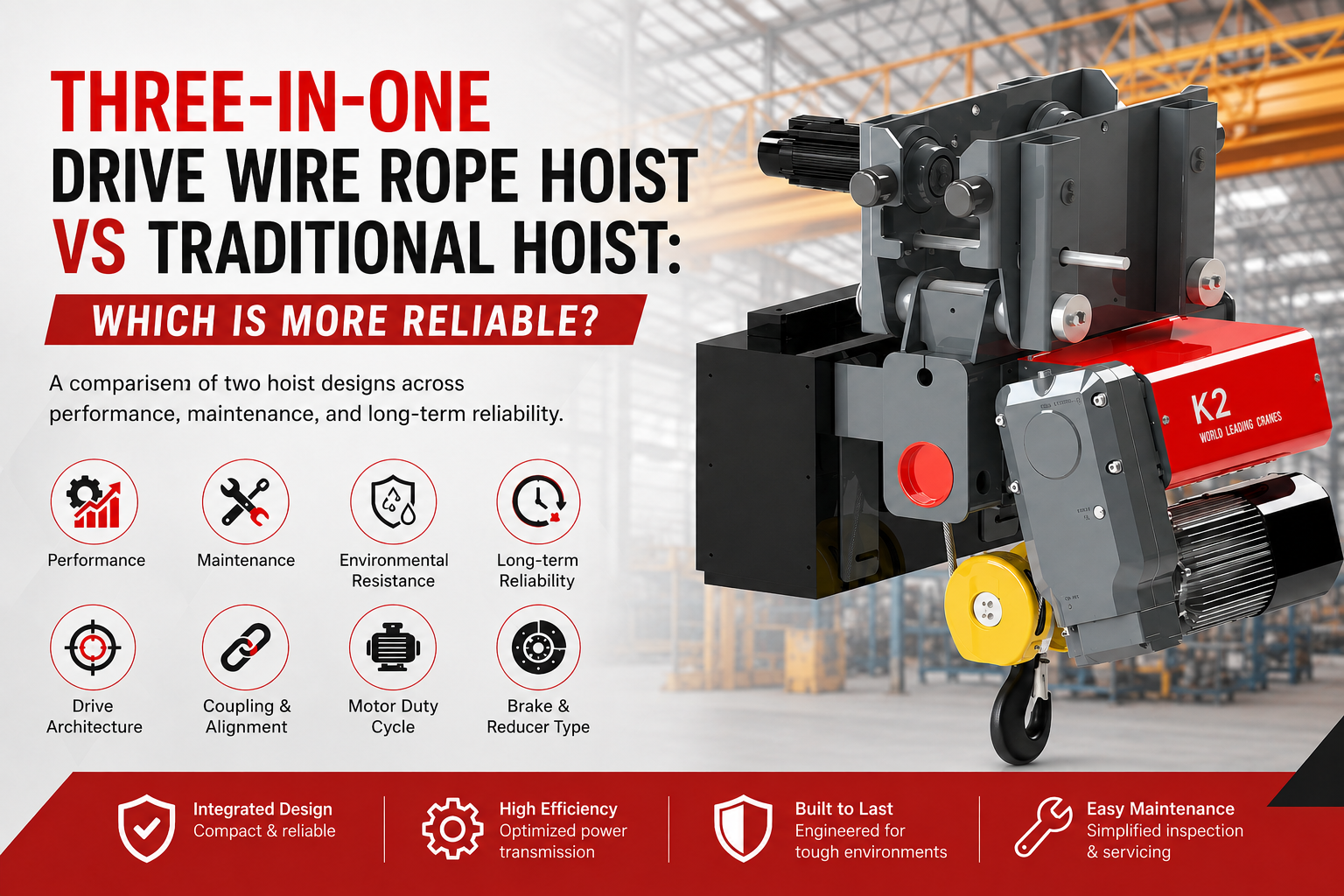
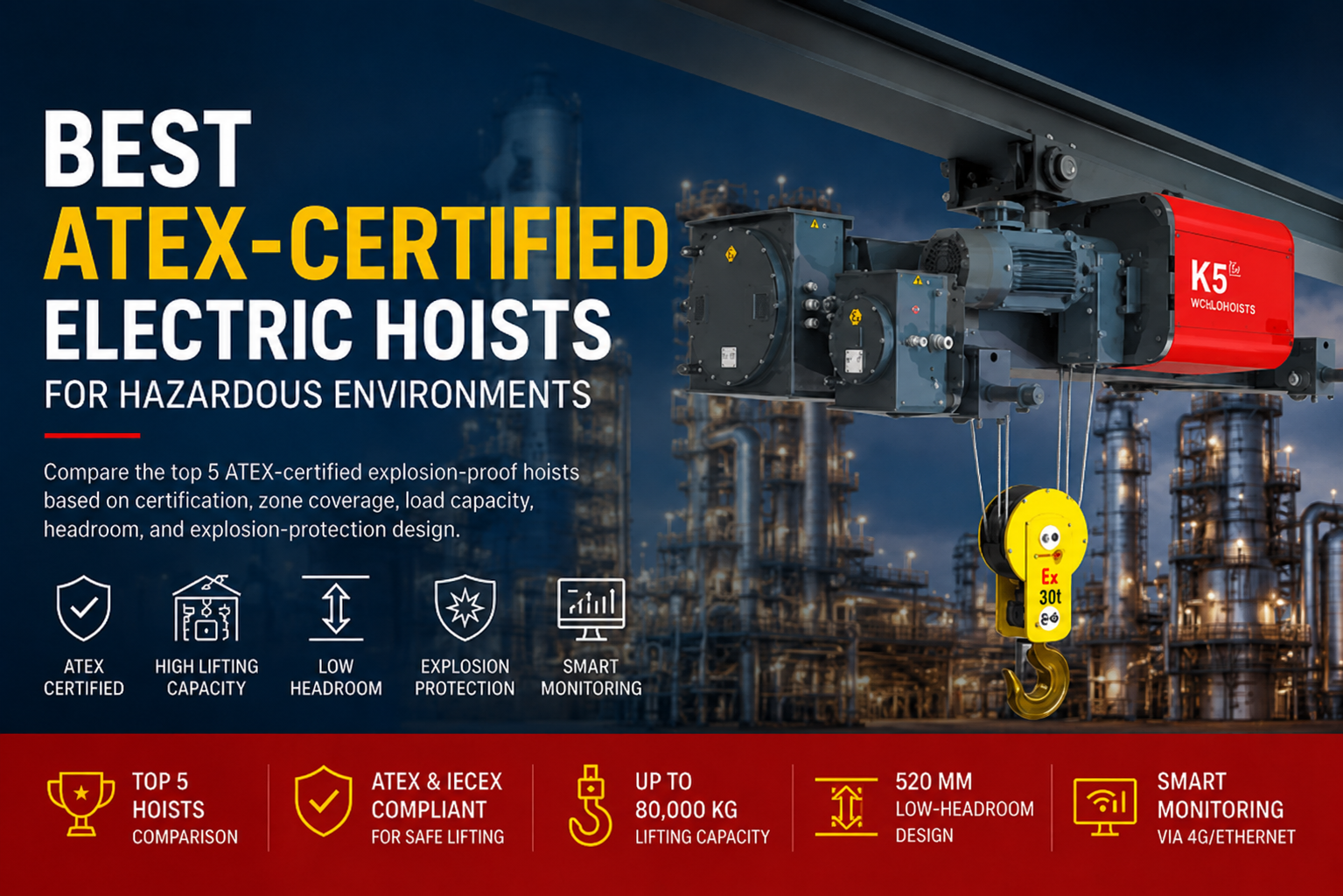
Electric hoists handle some of the most demanding lifting tasks in manufacturing, warehousing, and heavy industry. But what is actually happening inside that compact housing?
For engineers and procurement professionals, understanding the internal structure of an electric hoist is essential for selecting the right unit, maintaining it correctly, and operating it safely.
This article provides a detailed breakdown of the major systems inside an electric hoist, including key components, operating principles, duty cycles, and real-world applications. It also explains how different design features contribute to the performance and reliability of modern electric lifting solutions.
How Does an Electric Hoist Work?
An electric hoist is a motor-driven lifting device that uses electrical energy to raise, lower, and horizontally transport loads along an overhead runway beam via a drum and wire rope, or a chain and pocket wheel.
An electric hoist can be classified by hoisting medium (wire rope or chain), mounting style (top-running or low-headroom), duty class (M1–M8), and application requirements such as explosion-proof, cleanroom, or nuclear-grade environments. Understanding electric hoist duty cycles is essential because different working frequencies and load conditions determine the suitable hoist configuration for each application.
One of the main advantages of electric hoist systems is their compact and integrated structure. Motor, gearbox, drum, brake, electrical controls, and safety devices are assembled within a single unit, reducing installation complexity and improving operational control.
A simple hoist diagram can help illustrate how these key components work together, from the motor and transmission system to the lifting mechanism and safety devices.
Main Structural Components of an Electric Hoist
Although electric hoists come in various types, their core structural architecture is similar. A typical electic hoist consists of five major systems: the power and transmission system, hoisting and load-handling system, traveling and running system, electrical and safety control system, and enclosure/protective cover system.
The following simple hoist diagram illustrates the main components and how different systems work together to achieve safe and efficient lifting performance.
Below is a breakdown of each system’s key parts and functions.
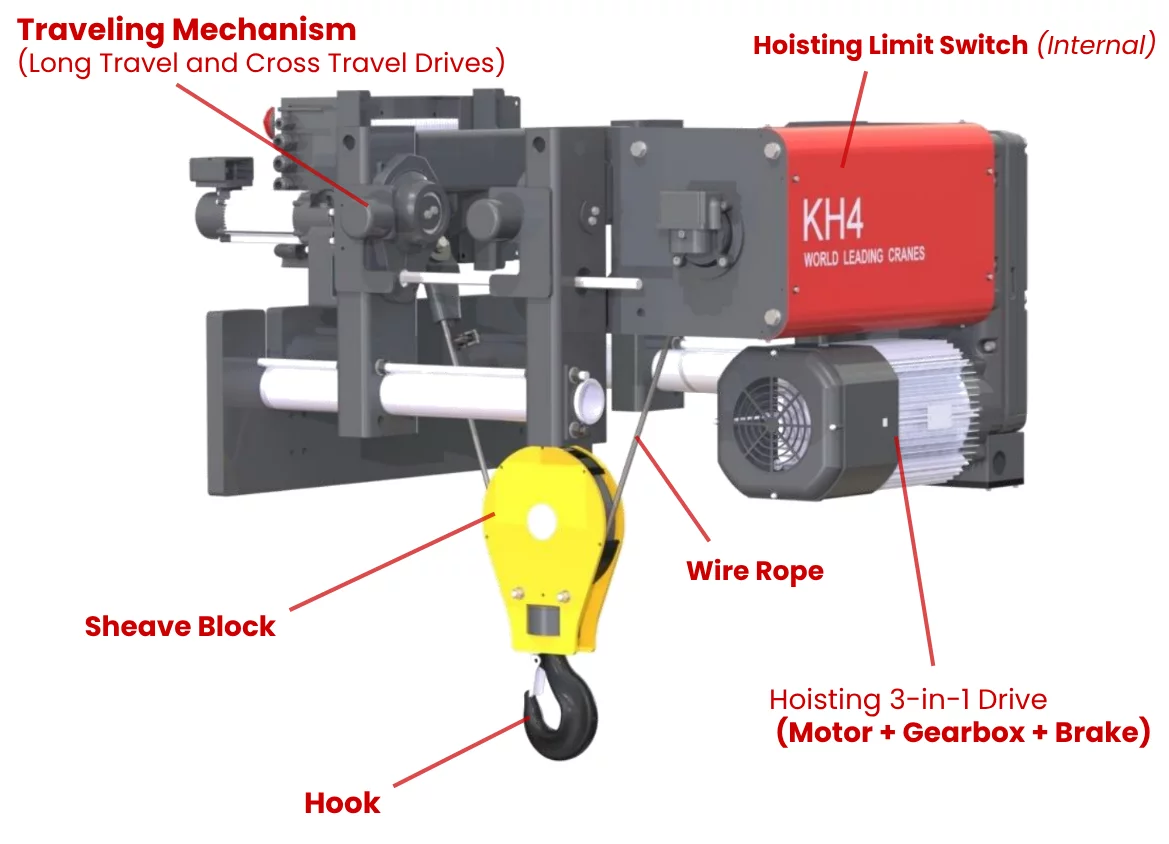
Simple hoist diagram: main structural components of an electric hoist
Below is a breakdown of each system’s key parts and functions.
1. Power and Transmission System
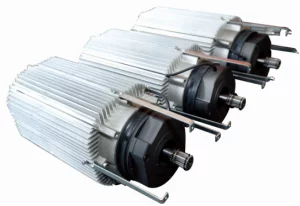
- Motor: The “heart” of the electric hoist. It often uses a cone rotor motor (with built-in axial braking) or a cylindrical disc brake motor. The motor offers high starting torque, strong load capacity, and excellent heat dissipation. This ensures stable operation during frequent starts/stops or heavy loads.
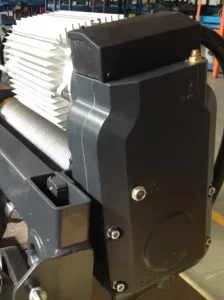
- Gearbox (Reducer): Converts the motor’s high-speed rotation to low-speed, high-torque output via multi-stage gears. It enables smooth hoisting. High-quality reducers are compact, low-noise, and efficient. They often adopt precision gear machining and sealed lubrication design.
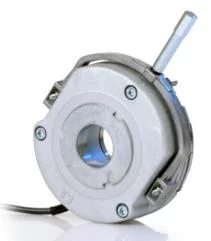
- Brake: Brake prevents the load from descending when power is cut or the operation stops. It is critical for operational safety. Conical rotor motors achieve braking through their inherent structure. Hoists using cylindrical motors are equipped with independent electromagnetic disc brakes, offering fast response, smooth braking, and long service life.
2. Hoisting and Load‑Handling System
- Drum and Wire Rope/Chain: The drum winds the lifting medium. Wire rope electric hoists are suitable for heavy loads, high-frequency operation, and large lifting heights. Chain hoists have a compact structure and are suitable for light loads, short travel distances, and mobile applications.
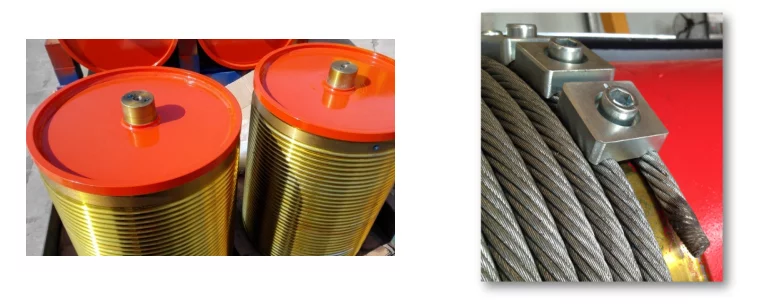
- Rope Guide: Ensures even winding of the wire rope on the drum, preventing tangling or jamming, and extending rope service life.
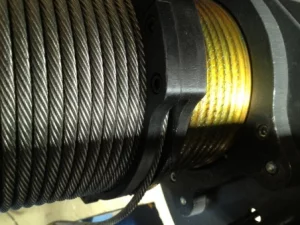
- Sheave Block/Pulley Block: Utilizes mechanical advantage to change the direction of force and improve lifting efficiency. It is indispensable in high-load lifting systems.
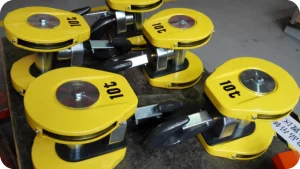
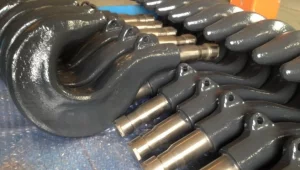
- Hook: Directly connects to the load. It is typically made of high-strength forged steel and equipped with a safety latch to protect both operators and equipment.
3. Traveling and Running System
▪ Long-Travel Drive Mechanism: Drives the entire unit to move longitudinally along the workshop or suspended track.
▪ Cross-Travel Drive Mechanism: Drives the hoist to move laterally along the main beam.
Together, these mechanisms enable precise positioning and flexible load handling within a two-dimensional plane.
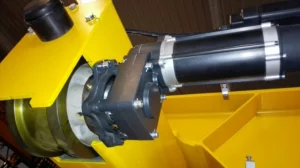
- Frames and Wheels: Support the overall structural weight and ensure stable movement along the track.
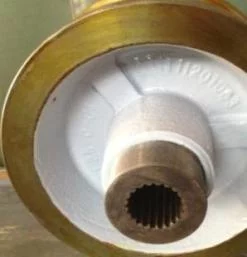
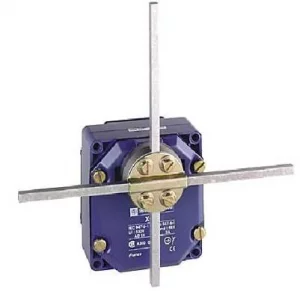
- Travel Limit Switch: Installed at both ends of the track to prevent overtravel or collision of the crane or trolley, providing safety protection.
4. Electrical and Safety Control System
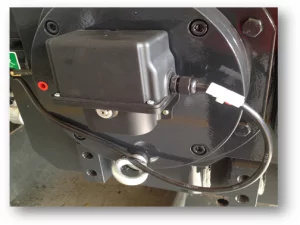
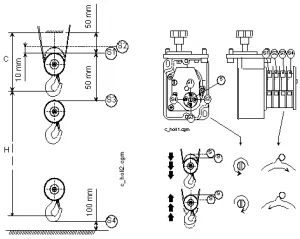
- Hoisting Limit Switch: Automatically cuts off the circuit when the hook reaches its upper or lower limit, preventing over-hoisting or dropping accidents.
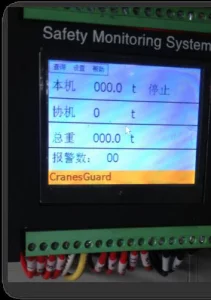
- Control System: Composed of an electrical control panel, contactors, relays, and operating devices. In some high-end models, such as WORLDHOISTS electric hoist and trolley products, the travel control panel and hoisting control panel are integrated into a single unit, improving operational efficiency and space utilization.
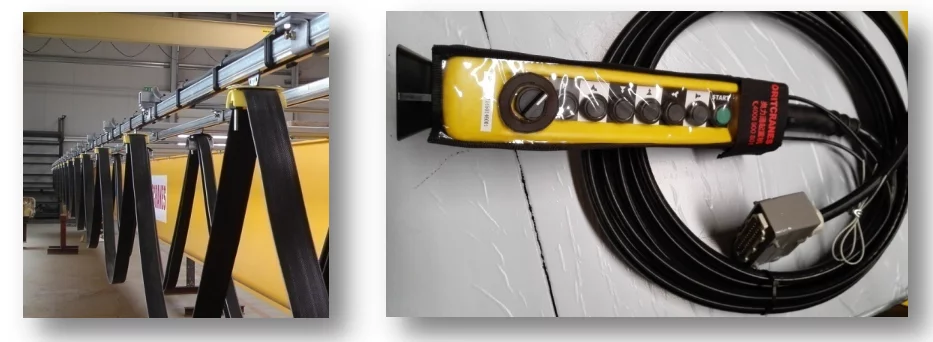
- Remote Controller: Operators can control the hoist via a pendant control or wireless remote, enabling operation at a safe distance and reducing exposure to suspended loads. Control voltage is typically 24V or 48V low-voltage DC to ensure safety.

- Emergency Stop Switch: An independent safety device separate from the standard control circuit. When activated, it immediately cuts off all power circuits. It is usually installed on both the pendant station and the main control panel to provide redundant protection, complying with EN 60204-32 safety standards.
Explore more: How an Advanced PCB is Reshaping Crane Remote Control & Its Benefits
5. Enclosure / Protective Cover
The enclosure protects internal components from dust, moisture, and mechanical impact. Industrial electric hoists typically have an IP55 protection rating (dust-protected and resistant to low-pressure water jets from any direction). In dusty or high-humidity environments, an IP65 rating (dust-tight and resistant to high-pressure water jets) can be selected.
Housing materials are chosen based on application requirements:
▪ Die-cast aluminum alloy: Lightweight with good thermal conductivity, commonly used in small or portable hoists.
▪ Cast iron or welded steel plate structures: Suitable for heavy-duty equipment, offering excellent impact resistance, effective vibration absorption, and extended service life.
Through the coordinated operation of these five systems, an electic hoist can achieve efficient, precise, and safe lifting and material handling within limited space. For example, in industrial lifting applications, an electic hoist example may include manufacturing facilities, warehouses, and heavy-duty workshops where reliable load handling and accurate positioning are required.
How to Select and Maintain an Electric Hoist?
Selection Criteria
When specifying an electric hoist, engineers should focus on application requirements, working conditions, and long-term reliability rather than unit price alone. Factors such as duty class, safety features, environmental protection, and key components determine the suitable configuration for different lifting applications.
Factor | What to Evaluate |
Duty Class | M4 for moderate use; M5–M6 for continuous heavy-duty cycles |
Brake Type | Electromagnetic for standard; permanent-magnet for wet/harsh environments |
Safety Features | Hoisting limit switch, overload protection, and emergency stop |
Key Components | Motor brand, rope/chain grade, gear material, and heat treatment |
IP Rating | IP55 minimum; IP65 for dusty or water-exposed installations |
Advantages and Applications of Electric Hoists
One of the key advantages of electic hoist systems is their compact structure, precise load control, and ability to improve efficiency in industrial lifting applications. Compared with traditional lifting solutions, electric hoists provide flexible configurations for different working environments, load requirements, and operational conditions.
An electic hoist example can be found in manufacturing plants, warehouses, workshops, and material handling facilities, where reliable lifting performance, accurate positioning, and safe operation are required for daily production activities.
Maintenance Basics
To maintain the performance and reliability demonstrated by electric hoist applications in industrial environments, regular inspection and preventive maintenance are essential. Prioritize the following:
• Brake: Inspect pad thickness and air gap regularly; confirm fail-safe function before each shift in critical applications.
• Wire rope: Check for broken wires, kinking, corrosion, and correct reeving on the drum. Replace withmanufacturer-specified discard criteria.
• Rope guide: Verify smooth traversal along the drum; replace worn guide pads to prevent rope crossover.
• Limit switches: Test hoisting and travel limit switches monthly; confirm they cut power before mechanical contact.
All maintenance beyond visual inspection and lubrication should be carried out by qualified technicians familiar with the hoist design and applicable safety standards (FEM, ISO 4301, ASME B30.16, or regional equivalents).
WORLDHOISTS Lifting Solutions
If you need reliable electric hoist solutions that meet demanding industrial requirements, WORLDHOISTS delivers lifting equipment designed for safety, efficiency, and long-term performance. With over 20 years of crane and hoist manufacturing experience, an annual output exceeding 10,000 units, and compliance with ISO, FEM, and GB standards, WORLDHOISTS is a trusted global lifting equipment partner serving industries from oil & gas and metallurgy to nuclear and cleanroom environments.
The K Series and H Series wire rope hoists cover capacities from 0.8t to 80t with lifting heights up to 90 m and duty classes from M4 to M6. Standard features include a two-speed hoist motor (optional VFD stepless control), galvanized 2160 N/mm² high-strength wire rope, electromagnetic disk brake, hardened gear reducer, drum and rope guide system, and IP55 protection. The integrated long-travel and hoist control box simplifies installation, while both pendant and wireless remote control options are available. Explosion-proof, cleanroom, nuclear-grade, and fully custom variants are also offered to match virtually any application.
Explore the full product range at worldhoists.com or contact the WORLDHOISTS team directly for a tailored lifting solution.
Electric hoists handle some of the most demanding lifting tasks in manufacturing, warehousing, and heavy industry. But what is actually happening inside that compact housing?
For engineers and procurement professionals, understanding the internal structure of an electric hoist is essential for selecting the right unit, maintaining it correctly, and operating it safely.
This article provides a detailed breakdown of the major systems inside an electric hoist, including key components, operating principles, duty cycles, and real-world applications. It also explains how different design features contribute to the performance and reliability of modern electric lifting solutions.
How Does an Electric Hoist Work?
An electric hoist is a motor-driven lifting device that uses electrical energy to raise, lower, and horizontally transport loads along an overhead runway beam via a drum and wire rope, or a chain and pocket wheel.
An electric hoist can be classified by hoisting medium (wire rope or chain), mounting style (top-running or low-headroom), duty class (M1–M8), and application requirements such as explosion-proof, cleanroom, or nuclear-grade environments. Understanding electric hoist duty cycles is essential because different working frequencies and load conditions determine the suitable hoist configuration for each application.
One of the main advantages of electric hoist systems is their compact and integrated structure. Motor, gearbox, drum, brake, electrical controls, and safety devices are assembled within a single unit, reducing installation complexity and improving operational control.
A simple hoist diagram can help illustrate how these key components work together, from the motor and transmission system to the lifting mechanism and safety devices.
Main Structural Components of an Electric Hoist
Although electric hoists come in various types, their core structural architecture is similar. A typical electric hoist consists of five major systems: the power and transmission system, hoisting and load-handling system, traveling and running system, electrical and safety control system, and enclosure/protective cover system.
The following simple hoist diagram illustrates the main components and how different systems work together to achieve safe and efficient lifting performance.
Simple hoist diagram: main structural components of an electric hoist
Below is a breakdown of each system’s key parts and functions.
1. Power and Transmission System
- Motor: The “heart” of the electric hoist. It often uses a cone rotor motor (with built-in axial braking) or a cylindrical disc brake motor. The motor offers high starting torque, strong load capacity, and excellent heat dissipation. This ensures stable operation during frequent starts/stops or heavy loads.
- Gearbox (Reducer): Converts the motor’s high-speed rotation to low-speed, high-torque output via multi-stage gears. It enables smooth hoisting. High-quality reducers are compact, low-noise, and efficient. They often adopt precision gear machining and sealed lubrication design.
- Brake: Brake prevents the load from descending when power is cut or the operation stops. It is critical for operational safety. Conical rotor motors achieve braking through their inherent structure. Hoists using cylindrical motors are equipped with independent electromagnetic disc brakes, offering fast response, smooth braking, and long service life.
2. Hoisting and Load‑Handling System
- Drum and Wire Rope/Chain: The drum winds the lifting medium. Wire rope electric hoists are suitable for heavy loads, high-frequency operation, and large lifting heights. Chain hoists have a compact structure and are suitable for light loads, short travel distances, and mobile applications.
- Rope Guide: Ensures even winding of the wire rope on the drum, preventing tangling or jamming, and extending rope service life.
- Sheave Block/Pulley Block: Utilizes mechanical advantage to change the direction of force and improve lifting efficiency. It is indispensable in high-load lifting systems.
- Hook: Directly connects to the load. It is typically made of high-strength forged steel and equipped with a safety latch to protect both operators and equipment.
3. Traveling and Running System
▪ Long-Travel Drive Mechanism: Drives the entire unit to move longitudinally along the workshop or suspended track.
▪ Cross-Travel Drive Mechanism: Drives the hoist to move laterally along the main beam.
Together, these mechanisms enable precise positioning and flexible load handling within a two-dimensional plane.
- Frames and Wheels: Support the overall structural weight and ensure stable movement along the track.
- Travel Limit Switch: Installed at both ends of the track to prevent overtravel or collision of the crane or trolley, providing safety protection.
4. Electrical and Safety Control System
- Hoisting Limit Switch: Automatically cuts off the circuit when the hook reaches its upper or lower limit, preventing over-hoisting or dropping accidents.
- Control System: Composed of an electrical control panel, contactors, relays, and operating devices. In some high-end models, such as WORLDHOISTS electric hoist and trolley products, the travel control panel and hoisting control panel are integrated into a single unit, improving operational efficiency and space utilization.
- Remote Controller: Operators can control the hoist via a pendant control or wireless remote, enabling operation at a safe distance and reducing exposure to suspended loads. Control voltage is typically 24V or 48V low-voltage DC to ensure safety.
- Emergency Stop Switch: An independent safety device separate from the standard control circuit. When activated, it immediately cuts off all power circuits. It is usually installed on both the pendant station and the main control panel to provide redundant protection, complying with EN 60204-32 safety standards.
Explore more: How an Advanced PCB is Reshaping Crane Remote Control & Its Benefits
5. Enclosure / Protective Cover
The enclosure protects internal components from dust, moisture, and mechanical impact. Industrial electric hoists typically have an IP55 protection rating (dust-protected and resistant to low-pressure water jets from any direction). In dusty or high-humidity environments, an IP65 rating (dust-tight and resistant to high-pressure water jets) can be selected.
Housing materials are chosen based on application requirements:
▪ Die-cast aluminum alloy: Lightweight with good thermal conductivity, commonly used in small or portable hoists.
▪ Cast iron or welded steel plate structures: Suitable for heavy-duty equipment, offering excellent impact resistance, effective vibration absorption, and extended service life.
Through the coordinated operation of these five systems, an electric hoist can achieve efficient, precise, and safe lifting and material handling within limited space. For example, electric hoist applications include manufacturing facilities, warehouses, and heavy-duty workshops where reliable load handling and accurate positioning are required.
How to Select and Maintain an Electric Hoist?
Selection Criteria
When specifying an electric hoist, engineers should focus on application requirements, working conditions, and long-term reliability rather than unit price alone. Factors such as duty class, safety features, environmental protection, and key components determine the suitable configuration for different lifting applications.
Factor | What to Evaluate |
Duty Class | M4 for moderate use; M5–M6 for continuous heavy-duty cycles |
Brake Type | Electromagnetic for standard; permanent-magnet for wet/harsh environments |
Safety Features | Hoisting limit switch, overload protection, and emergency stop |
Key Components | Motor brand, rope/chain grade, gear material, and heat treatment |
IP Rating | IP55 minimum; IP65 for dusty or water-exposed installations |
Advantages and Applications of Electric Hoists
One of the key advantages of electric hoist systems is their compact structure, precise load control, and ability to improve efficiency in industrial lifting applications. Compared with traditional lifting solutions, electric hoists provide flexible configurations for different working environments, load requirements, and operational conditions.
Electric hoist applications can be found in manufacturing plants, warehouses, workshops, and material handling facilities, where reliable lifting performance, accurate positioning, and safe operation are required for daily production activities.
Explore more: How to Choose an Explosion-Proof Hoist? 6 Key Factors You Can’t Ignore
Maintenance Basics
To maintain the performance and reliability demonstrated by an electic hoist example in industrial applications, regular inspection and preventive maintenance are essential. Prioritize the following:
• Brake: Inspect pad thickness and air gap regularly; confirm fail-safe function before each shift in critical applications.
• Wire rope: Check for broken wires, kinking, corrosion, and correct reeving on the drum. Replace withmanufacturer-specified discard criteria.
• Rope guide: Verify smooth traversal along the drum; replace worn guide pads to prevent rope crossover.
• Limit switches: Test hoisting and travel limit switches monthly; confirm they cut power before mechanical contact.
All maintenance beyond visual inspection and lubrication should be carried out by qualified technicians familiar with the hoist design and applicable safety standards (FEM, ISO 4301, ASME B30.16, or regional equivalents).
WORLDHOISTS Lifting Solutions
If you need reliable electic hoist solutions that meet demanding industrial requirements, WORLDHOISTS delivers lifting equipment designed for safety, efficiency, and long-term performance. With over 20 years of crane and hoist manufacturing experience, an annual output exceeding 10,000 units, and compliance with ISO, FEM, and GB standards, WORLDHOISTS is a trusted global lifting equipment partner serving industries from oil & gas and metallurgy to nuclear and cleanroom environments.
The K Series and H Series wire rope hoists cover capacities from 0.8 t to 80 t with lifting heights up to 90 m and duty classes from M4 to M6. Standard features include a two-speed hoist motor (optional VFD stepless control), galvanized wire rope, electromagnetic disc brake, hardened gear reducer, drum and rope guide system, and IP55 protection. The integrated long-travel and hoist control box simplifies installation, while both pendant and wireless remote control options are available. Explosion-proof, cleanroom, nuclear-grade, and fully customized variants are also available to meet different industrial application requirements.
Explore the full product range at worldhoists.com or contact WORLDHOISTS team directly for a tailored lifting solution.