Understanding industrial lifting systems begins with exploring the complex network of structural and mechanical systems that work together to handle heavy loads. When analyzing an overhead crane, we notice how various individual units collaborate seamlessly to lift, move, and position heavy weights. Each component plays an essential part in maintaining stability, ensuring safety, and achieving smooth motion across the facility.
For engineering teams and facility managers, identifying the key overhead crane parts helps optimize daily operations and streamline maintenance schedules. These systems must handle immense stress while maintaining precise control during complex maneuvers. Our team at World Hoist prioritizes deep knowledge of these systems to help partners select, inspect, and manage their equipment effectively.
The Foundation of Horizontal Motion
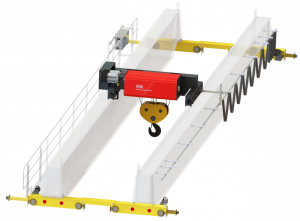
The bridge serves as the main structural beam that spans the width of your workspace. As a primary load-bearing element, this structure supports the trolley and hoist as they traverse the facility. Depending on specific capacity requirements, the bridge can consist of a single girder or a double girder design, which determines how much weight the system can handle.
Connected to both ends of the bridge, end trucks house the wheels that travel along the runway tracks. These end trucks house specialized wheels, bumpers, and drive assemblies that allow longitudinal travel. When looking at the parts of an overhead crane, the alignment of the bridge and its end trucks is vital for avoiding structural wear and ensuring tracking stability.
Core Power and Lifting Assembly
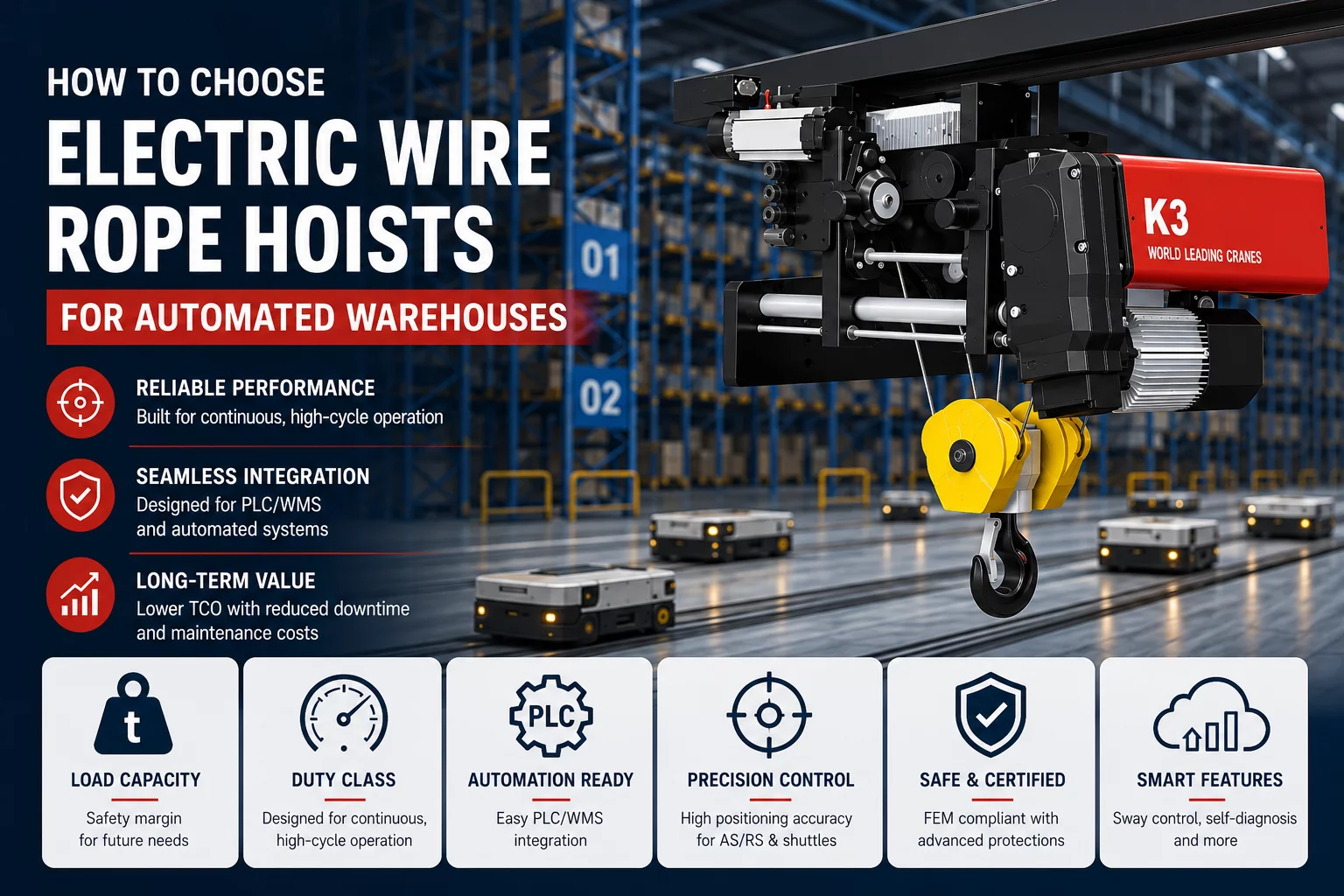
At the center of any lifting system sits the hoist, which is the mechanical unit responsible for raising and lowering the load. This mechanism utilizes wire ropes or chains wound around a rotating drum to convert motor torque into vertical lifting force. Choosing a reliable hoist design directly impacts the overall capacity and service life of the entire lifting system.
To allow side-to-side movement, the hoist is mounted on a trolley that travels along the bridge girders. The trolley and hoist work together to position the hook directly over the load before lifting begins. These essential overhead crane components require regular lubrication, precise motor control, and reliable braking systems to perform daily duties safely.
Guiding Rails and Support Structures
Runway beams support the entire weight of the bridge and its payload. These parallel beams are either mounted directly to the building structure or supported by free-standing steel columns. The straightness and structural integrity of these runways determine how smoothly the equipment travels through the bay.
To prevent structural damage, heavy-duty bumpers are installed at the ends of the runways and bridge structures. These safety parts absorb kinetic energy in case the system reaches its physical travel limits. Keeping these tracks clean and properly aligned prevents premature wear on the wheels and reduces structural stress on the building.
Specialized Crane Kits & Lifting Attachments
Implementing custom solutions often requires utilizing integrated Crane Kits & Lifting Attachments to match specific material handling needs. These comprehensive packages include pre-engineered components like end trucks, control panels, festoon systems, and hoists that simplify the assembly of a complete system. Selecting standardized kits helps reduce engineering design time and ensures compatibility between all moving parts.
Beneath the hook, specialized lifting attachments such as spreader beams, sheet lifters, and magnets are used to secure different loads. These attachments are designed to distribute weight evenly and prevent damage to delicate materials during transport. Our team at World Hoist develops custom attachments to handle complex loads across varied industrial environments.
Electrical Systems and Power Delivery
Continuous power delivery is maintained through specialized electrical systems like conductor bars or festoon cable systems. Festoon systems utilize flexible cables suspended from C-tracks to supply electricity to the moving trolley without tangling. This setup protects power and control cables from wearing out during rapid back-and-forth travel.
Modern control systems range from traditional pendant controllers hanging from the hoist to advanced wireless radio remotes. These controllers allow operators to manage all directions of movement from a safe distance. Having precise variable frequency drives in the control system allows for smooth acceleration and deceleration, preventing heavy loads from swinging dangerously.
Safety Devices and Limiting Controls
To protect personnel and equipment, advanced limiting devices are integrated into every motion system. Travel limit switches automatically cut off power when the hoist or bridge gets too close to its physical travel boundaries. This prevents accidental collisions and over-travel, which can cause severe structural failures.
Load monitoring sensors measure the exact weight being lifted to prevent operators from exceeding the maximum rated capacity. If an overload occurs, the system triggers alarms and restricts further lifting while allowing the operator to safely lower the weight. Maintaining these safety controls is critical for preventing accidents and keeping operations compliant with industry standards.
Conclusion
Understanding the function of each mechanical and structural part is the first step toward achieving safe, reliable, and efficient lifting operations. Regular inspection of girders, hoists, runways, and electrical systems helps prevent unexpected downtime and extends the overall life of your equipment.
At World Hoist, we focus on providing highly reliable Crane Kits & Lifting Attachments to support global lifting challenges. By choosing high-quality components and committing to routine maintenance, industrial facilities can secure long-term productivity and ensure a safe working environment for their operators.