Automated warehouses put electric wire rope hoists through a very different workload than a typical workshop crane — continuous cycles, tight integration with AS/RS and shuttle systems, and little tolerance for downtime. Choosing the right hoist means going beyond load capacity and price. This guide walks through the factors that actually determine long-term reliability: duty class, FEM compliance, control system integration, and total cost of ownership, so you can compare options with confidence.
Why Hoist Selection Matters More in Automated Warehouses
There are three reasons.
First, a hoist failure halts the entire automated line. The hoist is usually a critical node in the material handling chain, so when it stops, every process before and after it stops too. The cost is not just repair; it is the lost output of the whole line.
Second, automated warehouses push hoists through far more duty cycles than a workshop does. A workshop hoist might start and stop a few dozen times a day. A hoist inside an automated warehouse runs on the system’s cycle rhythm continuously, and the number of cycles per day can be several times, or even tens of times, higher. A hoist rated for workshop-level cycling will wear out its wire rope, brake, and gearbox far faster than expected once it’s running at this pace, which is why cycle frequency has to factor into selection from the start.
Third, integrated hoists are costlier to repair or replace. An automated warehouse hoist is not a standalone machine. It is tied into the PLC and WMS (Warehouse Management System). Replacing it means recommissioning the control logic that connects it to the rest of the system, which is far more complex than swapping out an isolated piece of equipment.
Managing these three risks requires looking beyond rated capacity and price. The sections below walk through the specific factors that determine it: load capacity and duty class, control and environment compatibility, and total cost of ownership.
Load Capacity and Lifting Height
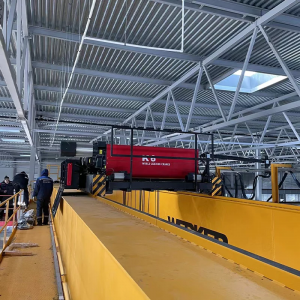
Take the heaviest expected load and select the next standard capacity tier up, rather than a hoist rated exactly at that maximum — this margin absorbs load fluctuation and future jobs that exceed today’s numbers.
For lifting height, measure the full vertical travel and add clearance for mounting hardware and fixed obstructions such as beams or conveyor structures — height errors surface only after mounting and cannot be corrected on site.
Duty Class for Continuous, High-Cycle Operation
Duty class depends on two numbers, not load capacity alone: utilization rate (hours run per day) and load spectrum (how close to full capacity those runs typically are). FEM/ISO classifies hoists into M-ratings — M3 through M8 — based on combinations of the two.
These two numbers matter because they can diverge even when rated capacity doesn’t: two hoists rated for the same 5-ton load can require different duty classes — one running 16 hours a day near full load needs a significantly higher M-rating than one running 4 hours a day at half load. Selecting by capacity alone, without checking utilization and load spectrum, is a common cause of premature hoist failure in automated warehouses.
Control System and Automation Integration
Match the control system to the hoist’s role in the cycle. A hoist triggered and sequenced by the warehouse’s automation logic requires PLC/WMS integration — accepting digital commands for position, speed, and load status rather than manual pendant control.
Where the hoist’s role also involves AS/RS or shuttle systems, control matching extends to positioning accuracy: obtain the required tolerance from the AS/RS or shuttle supplier, then verify each candidate hoist against that figure. Drop any hoist whose stated tolerance is looser than required, regardless of its performance on capacity or duty class.
Operating Environment and Power Requirements
Check the hoist against three facility conditions before shortlisting it:
- Ambient temperature:the facility’s actual temperature range, including seasonal extremes if the space isn’t climate-controlled
- Dust exposure:the facility’s actual particulate level in the air
- Explosion-proof requirements: whether the space is a classified hazardous zone
Each condition maps to a specific spec check: match the hoist’s motor and control component ratings against the temperature range, match the enclosure’s IP rating (e.g., IP54 vs IP65) to the actual dust level, and confirm ATEX or equivalent certification if the facility handles flammable materials or sits in a classified hazardous zone.
Once these three checks pass, confirm voltage, phase count, and frequency against the hoist’s nameplate before placing the order. Environment and power compatibility come before price comparison — a hoist that fails on either is not a viable candidate.
FEM Compliance and Safety Certification
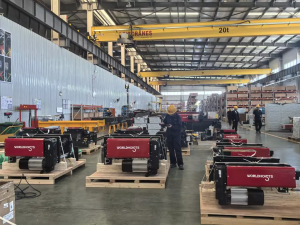
Request FEM 9.511 (mechanism classification) and FEM 9.755 (hoist-specific classification) for every shortlisted hoist, and verify rated load, duty class, and motor power against the nameplate data on the hoist itself.
If all three sources agree, the duty class is considered verified; if a supplier can only provide a spec sheet or verbal claim without matching documentation, treat the M-rating as unconfirmed and resolve it before committing budget.
Long-Term Maintenance Cost (TCO)
Request three figures per shortlisted hoist: purchase price, downtime cost per hour of stopped output, and expected replacement interval and cost for wire rope, brake, and gearbox components under your specific duty class — not generic figures, since wear rate depends on your utilization and load spectrum.
Weigh these three figures against each other rather than defaulting to the lowest purchase price: a hoist priced lower upfront but with a shorter replacement cycle can cost more within a few years once labor and downtime are added in.
Quick Decision Checklist
Run through each question below before making a final decision — each one maps to a factor covered above.
- Does the load capacity include a safety margin above the heaviest expected load?
- Does lifting height include clearance for mounting hardware and obstructions?
- What is the hoist’s duty class (M-rating), based on your actual daily run hours and load ratio — not just maximum load?
- Can the control system integrate with your PLC/WMS and meet the positioning accuracy your automated system requires?
- Does the hoist match your facility’s operating environment (temperature, dust, explosion-proof needs) and power supply?
- Can the supplier provide FEM 9.511/9.755 documentation and nameplate data to verify the stated duty class?
- Have you compared total cost of ownership — purchase price, wear-part replacement cycles, and downtime risk — across shortlisted options, not just the upfront quote?
If a candidate hoist clears every item on this checklist, it’s ready for final comparison and quotation — if it fails any item, especially environment, power, or FEM documentation, remove it from consideration regardless of price or lead time.
WORLDHOISTS Wire Rope Hoists and Intelligent Features for Automated Warehouses
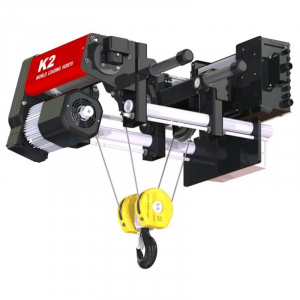
WORLDHOISTS has spent nearly 20 years engineering wire rope hoists, backed by 400+ patents and 624+ global clients across three manufacturing facilities. Here’s what that experience delivers in wire rope hoists:
- Capacity and reach: 8–80 tons lifting capacity, up to 90 meters lifting height
- Duty class: M4–M6 standard, with a 60% ED motor rating for continuous cycling rather than intermittent workshop use
- Environmental protection: IP55 rating and -5°C to +40°C operating range standard, with explosion-proof, clean room, metallurgy, and nuclear configurations available on request
- Safety systems: overheat, overload, and fall protection built into every unit, not optional add-ons
For automated warehouses specifically, the intelligent features address the positioning accuracy and system alignment these facilities require. Inching moves the load in preset increments as fine as 2mm for precise final positioning, while Sway Control cuts swing by over 90% to keep it stable en route. Off-Track Correction and Track Centering apply the same logic to the crane itself, using onboard PLC and sensors to self-correct alignment. Fault Self-Diagnosis and the My Crane app extend that monitoring to daily operation, with automation available for PLC/WMS-coordinated facilities.
Together, these specs and features make WORLDHOISTS wire rope hoists built for the demands of automated warehouse operation.
Final Takeaway
Choosing an electric wire rope hoist for an automated warehouse comes down to matching duty class, control integration, and certification to your actual operating profile — not just capacity and price. WORLDHOISTS’ wire rope hoists and intelligent features are built for exactly this kind of continuous, high-precision operation. Contact us to discuss the right hoist for your facility.