Safely securing irregular loads requires highly specialized hardware designed to bridge the gap between a standard crane hook and the payload itself. Utilizing the correct below the hook attachments protects fragile materials from structural deformation and prevents slipping during vertical transit. Our engineering team at World Hoist works with industrial clients to select and configure these essential connection mechanisms for various workshop applications.
Every material handling challenge demands a unique physical solution to balance gravity, friction, and structural capacity. When the rigging setup matches the payload’s physical properties, the overall lift remains stable and predictable. We focus on providing detailed structural insights to help industrial operations select the right load-handling accessories for their facilities.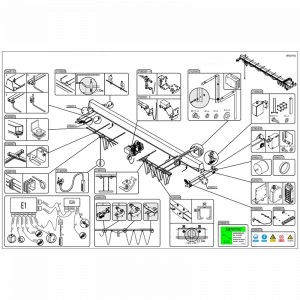
Understanding Below-the-Hook Mechanics
Lifting complex industrial loads requires distributing gravitational forces evenly across multiple structural pick points. Standard hooks are designed for vertical pulling forces, meaning they cannot safely handle wide or unbalanced payloads on their own. Utilizing specialized rigging beams helps align the lifting cables vertically, preventing damaging bending forces from straining the main crane hook.
Calculating the exact center of gravity of the payload is the first critical step before selecting any rigging configuration. An unbalanced load will tilt unexpectedly when lifted, placing high physical stress on individual rigging lines and causing severe load sway. Proper structural analysis ensures that the physical forces are distributed safely and evenly during every lift.
Categorizing Common Connection Hardware
Spreader Beams: These structural bars use compression forces to keep the lifting slings vertical, protecting long or flexible loads from crushing forces.
Lifting Beams: Designed to handle bending forces directly, these heavy beams are ideal for facilities with limited headroom where short rigging lines are necessary.
Using specialized below hook lifting equipment ensures that your rigging team can connect to various load shapes with high physical stability. These mechanical devices are engineered to handle specific industrial shapes, such as steel coils, flat plates, or concrete pipes. At World Hoist, we provide durable, custom-engineered solutions to meet these demanding material handling requirements safely.
Ergonomic Workplace Material Handling
Vacuum Lifters: These pneumatic suction devices grip flat, non-porous sheets securely without scratching the polished metal surfaces.
Mechanical Grabs: Utilizing physical clamping forces, these automatic devices grip heavy cylinders or boxes securely as the hoist raises the load.
Integrating dedicated lift assist devices into repetitive workstation assembly lines helps prevent physical strain on workers. These ergonomic tools assist operators in moving heavy components with high precision and very little physical effort. Utilizing these specialized devices reduces fatigue and creates a much safer, more comfortable workspace.
Selecting Compatible Rigging Accessories
Securing raw materials safely requires choosing accessories that match both the load capacity and the environmental conditions of the workshop. Standard alloy steel chains are highly durable but can scratch or dent finished machinery parts during transport. Utilizing synthetic webbing slings provides a soft, protective barrier that wraps around delicate surfaces without causing damage.
Choosing the right crane lifting attachments involves analyzing chemical exposures, temperature limits, and physical wear factors on the workshop floor. For example, high-heat environments like metal foundries require heat-resistant metal mesh slings rather than synthetic webbing. Matching the accessory material to your specific plant environment prevents early rigging degradation and potential failures.
Designing Complete Integrated Crane Systems
Achieving maximum workshop efficiency requires that every component, from the structural bridge beam to the bottom hook, works together seamlessly. Selecting pre-engineered Crane Kits & Lifting Attachments ensures that all electric hoists, end carriages, and control panels are fully compatible from day one. This structural compatibility prevents mechanical binding and minimizes vibration during rapid travel cycles.
We provide comprehensive one-stop services, from initial design discussions to final delivery, to support your project goals. Our technical team works closely with your staff during on-site consultations to help select the most efficient crane configurations. Utilizing fully matched equipment kits simplifies on-site assembly and reduces installation times dramatically.
Rigging Safety Inspections and Maintenance
Continuous daily lifting operations gradually wear down even the strongest forged steel hooks, shackles, and lifting beams. Regular visual inspections are critical to detect micro-cracks, thread wear, or structural stretching in your below hook lifting equipment assemblies. Removing damaged rigging components from service immediately keeps your facility compliant with international safety standards.
Conducting periodic load tests under controlled conditions verifies that the welds and pins can handle maximum capacities safely. Keeping detailed records of these inspections helps maintenance managers track the wear rates of their active below the hook attachments. Protecting your lifting components from rust and impact damage ensures they deliver a long, safe service life.
Conclusion
Optimizing your material handling operations requires a clear understanding of your load dimensions, weights, and environmental conditions. Utilizing high-efficiency crane lifting attachments and ergonomic lift assist devices protects your workforce from injury while preventing load slips.
At our team, we focus on delivering comprehensive engineering support and durable components to help global industries achieve their goals. By maintaining strict inspection routines and investing in matched Crane Kits & Lifting Attachments, facilities can secure a safe, highly productive, and efficient manufacturing future.