Planning a highly productive industrial layout requires a detailed analysis of how far lifting equipment can travel within a building. Every inch of unusable floor space represents lost manufacturing potential and restricted cargo handling capabilities. Getting familiar with the crane hook approach helps facility designers utilize their available work bays more effectively. This geometric layout factor determines exactly how close the lifting hook can get to the facility walls.
Maximizing the usable travel area prevents wasted space near building columns and deep corners. At World Hoist, we prioritize sharing clear engineering principles to help partners lay out their workspaces with high spatial efficiency. By focusing on critical physical clearances, companies can establish smoother, more flexible material handling workflows throughout their factories.
Defining the Spatial Lifting Boundary
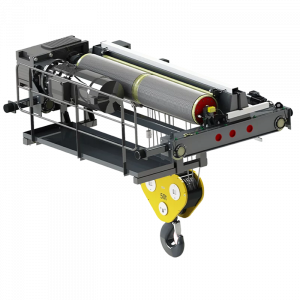
Hook approach refers to the minimum distance the hook can reach relative to the crane’s travel limits, depending on the crane configuration and the direction of travel. This physical limit exists because the structural trolley frame and end trucks require a set amount of physical space to operate. Understanding this boundary helps facility designers map out their active lifting zones accurately.
These physical clearance limits apply to both the cross-travel trolley movement and the long-travel bridge movement along the runway tracks. If a trolley has a large width, the hook cannot reach close to the side walls of the building bay. This leaves a structural blind spot where materials cannot be picked up or placed by the crane.
Optimizing Factory Floor Usability
Reducing the overhead crane hook approach distance allows manufacturing plants to place heavy production machinery closer to the walls. This spatial optimization frees up central aisle space for forklifts, material transport carts, and worker foot traffic. Utilizing compact trolley designs prevents the creation of awkward, unusable floor zones along the perimeter.
Minimizing this clearance is especially important in compact workshops where every square meter directly affects operational capabilities. When planning a new facility layout, engineers must match the structural dimensions of the building with the physical profile of the lifting equipment. This careful coordination allows plants to gain maximum floor coverage without increasing the overall size of the building.
Choosing Compact Traveling Mechanisms
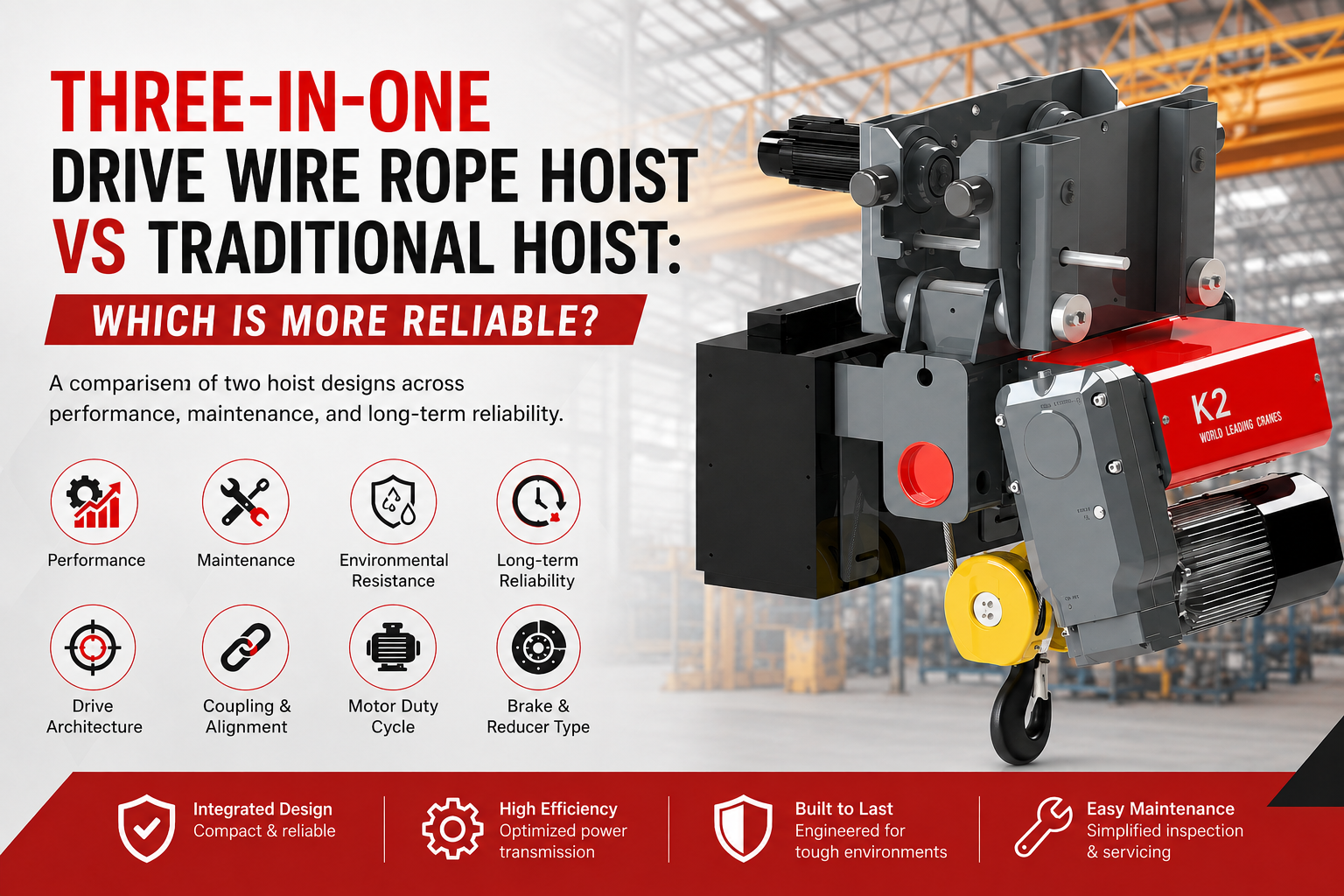
Low-headroom machinery designs utilize side-mounted drum configurations to bring the hook closer to the support girders. Installing a compact wire rope hoist is an effective way to minimize horizontal and vertical clearance losses. These specialized space-saving designs allow the hoist unit to tuck closely against the bridge steel.
Standard hoists often require bulky mounting frames that naturally push the hook further away from the structural end trucks. Choosing a hoist engineered specifically for tight clearance zones helps facilities gain extra travel space. Our team at World Hoist develops highly compact traveling configurations to help industrial plants solve these spatial limitations.
Enhancing Structural Design and Layouts
Using advanced calculation software during the planning stages helps architects design smaller building structures while maintaining the necessary lifting areas. Reducing the necessary overhead crane hook approach distance allows companies to lower the overall height and width of new steel buildings. This structural reduction significantly lowers building construction costs and ongoing heating expenses.
Lowering the physical profile of the traveling machinery also reduces the bending moments applied to the building columns. When the trolley can travel closer to the runway rails, the vertical forces distribute more directly into the vertical support steel. This optimal distribution prevents twisting forces from straining the structural connections of the building.
Auxiliary Lifting and Pulling Systems
Even with the most careful layout optimization, certain existing facilities or unusual bay geometries may still leave small areas that the main hook cannot reach. In such cases, industrial plants sometimes integrate heavy‑duty winches or auxiliary pulling devices to handle material positioning in these tight corners. However, these should be viewed as secondary workarounds, not as substitutes for a well‑designed hook approach. The primary goal remains reducing the hook’s blind spots through compact trolley designs, narrower end trucks, and low‑headroom hoists – because every inch gained directly on the hook travel eliminates the need for extra handling steps.
While auxiliary winches can offer temporary relief for out‑of‑reach spots, they add complexity, maintenance, and operational costs. Relying on them too heavily often masks underlying inefficiencies in the crane’s own travel geometry. A far more sustainable solution is to retrofit existing bridges with high‑torque, space‑saving end trucks or to upgrade to a wire rope hoist with a side‑mounted drum configuration. Our team specializes in exactly these compact mechanical upgrades, helping you shrink the hook approach distance so that your main crane covers nearly every usable square meter – reducing the need for auxiliary devices and keeping your workflow simple, safe, and productive.
Engineering Methods for Better Clearance
Engineering teams can take several proactive steps to maximize crane hook approach capabilities during a system upgrade. Retrofitting existing cranes with narrower, high-torque end trucks reduces the physical space needed at the runway ends. This mechanical change allows the main bridge beam to travel further down the length of the building tracks.
Implementing smart travel limit switches also helps control physical stop points with high precision. These electronic controls let the bridge safely travel closer to the physical end stops without risking structural collisions. Our engineering team at World Hoist works to deliver tailored, compact components that help facilities recover valuable floor space.
Conclusion
Understanding how the crane hook approach affects your factory layout is essential for achieving a highly efficient manufacturing environment. Minimizing the physical footprint of your trolley and bridge structures allows your team to utilize every corner of the workspace.
At World Hoist, we focus on providing compact wire rope hoist systems and specialized mechanical components to help global industries optimize their space. Taking time to define your specific hoist hook approach definition and working to maximize crane hook approach zones allows facilities to secure a flexible, safe, and highly productive operational future.