Evaluating the structural safety of industrial lifting machinery becomes highly critical as manufacturing facilities age and production demands evolve. Estimating the average lifespan of an overhead crane requires tracking structural fatigue, material handling frequency, and historical environmental exposures within the plant. Our engineering specialists at World Hoist collaborate with heavy industries to analyze these mechanical baselines, helping facilities transition smoothly away from degraded machinery.
Ignoring structural micro-cracks or severe runway alignment issues can cause major operational disruptions on a busy workshop floor. Implementing a systematic evaluation plan determines whether aged handling structures require a localized overhaul or a total system retirement. We focus on exploring the core technical indicators that point to structural obsolescence in industrial facilities.
Determining the Average Operational Lifecycle
Industrial structural systems face continuous cyclic loading that gradually changes the physical properties of their steel bridge girders. The average lifespan of an overhead crane typically spans several decades, but this window shrinks dramatically under high-frequency foundry or mining cycles. Understanding the CMAA duty classes helps maintenance managers predict when a bridge will begin to exhibit structural fatigue.
Environmental conditions like ambient chemical vapors or high heat accelerate material degradation, regardless of actual hook usage. Once a structural beam enters its late-stage lifecycle, the risk of micro-fracturing along critical weld lines rises significantly. Engineers must monitor these structural changes to prevent sudden material breakdowns during daily shifts.
Signs Your Lifting Structure Requires Technical Remediation
Frequent Electrical Faults: Pitted contactors and brittle insulation cause frequent short circuits that disrupt automated production lines.
Runway Rail Wear: Severe track misalignment forces the traveling wheels to bind, creating excessive structural vibration.
Deciding to repair overhead crane components makes full economic sense when the core structural beams remain straight, true, and free of fatigue. Replacing worn brake pads or upgrading worn electrical pendants can restore old equipment to safe working order. At World Hoist, we guide maintenance teams through these critical structural assessments to identify the most sensible repair path.
Evaluating When Component Retrofits Fail
Obsolete Controls: Finding replacement contactors for older control panels becomes impossible once the original equipment manufacturers stop supporting the model.
Widespread Structural Cracking: Finding multiple hairline fractures along the main girder welds indicates that the steel has reached its physical limits.
Attempting to repair overhead crane setups repeatedly can drain a facility’s maintenance budget without providing a long-term safety solution. When structural fatigue penetrates deep into the core metal composition, localized welding patches provide only temporary relief. Recognizing these deep mechanical limits prevents teams from wasting resources on unfixable, aged structural assets.
Sourcing Modular and Efficient Replacement Hoists
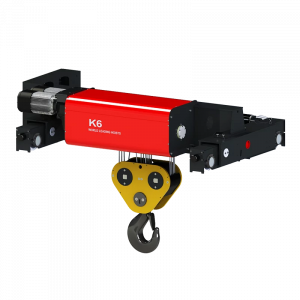
Upgrading an aging crane bridge often requires replacing a heavy, worn-out lifting mechanism with a modern, low-headroom configuration. Our versatile K Series and H Series wire rope hoist units offer an energy-efficient design that integrates with existing single girder setups. These advanced models handle lifting capacities from 0.8 t up to 80 t, lifting heights reaching 90 meters, and duty classes from M4 to M6.
Equipped with an IP55 protection rating and a sixty percent ED motor duty cycle, this compact wire rope hoist thrives in demanding plant environments. Choosing these pre-engineered lifting modules reduces the deadweight on your old runway beams, extending the overall service life of your bridge structure.
Navigating Total System Replacement Logistics
Continuous material handling demands eventually make it necessary to completely replace overhead crane infrastructure to maintain adequate production speeds. Installing a modern bridge system allows facilities to utilize lighter, high-strength alloys that reduce total building load stress. This complete machinery change out removes the operational restrictions caused by old, slow-moving logistics equipment.
Planning the physical removal of an old multi-ton bridge requires close coordination to avoid disturbing active production lines nearby. Our project team handles these mechanical transitions systematically, coordinating every detail from structural engineering to final commissioning. Choosing to replace overhead crane units allows factories to adopt higher structural classifications to handle heavier daily manufacturing cycles.
Financial and Operational Impact of System Modernization
Lower Energy Consumption: Modern variable frequency drives use significantly less electrical power during acceleration compared to old slip-ring motors.
Reduced Downtime Costs: Installing reliable modern machinery minimizes unexpected production stalls, keeping your logistics moving predictably.
Investing in a complete facility modernization project drastically reduces your annual spare parts expenditures. Modern lifting configurations incorporate smart safety monitors that alert maintenance crews to wear before a failure occurs. These digital tools transform how plants manage their heavy assets, turning unpredictable breakdowns into scheduled maintenance events.
Conclusion
Determining the right time to transition away from aging handling machinery requires a careful analysis of structural wear, repair histories, and spatial constraints. Keeping close track of the structural health of your equipment protects your workforce and prevents sudden, expensive assembly stoppages. Our team remains dedicated to providing high-efficiency wire rope units, modular crane components, and precise engineering support to guide your plant upgrades. By combining routine component inspections with a clear modernization plan, industrial operations can secure a highly productive, compliant, and safe manufacturing future.