Modern industrial workspaces require smart, localized lifting options to handle daily load transfers without disrupting larger assembly lines. Integrating a versatile jib crane directly into localized assembly bays helps minimize operator strain and reduces transit delays. Our engineering team at World Hoist works to help industrial businesses map out these localized lifting solutions to improve their daily manufacturing workflows.
Heavy-duty overhead systems often leave blank spots in corners or along walls where large girders cannot reach. Adding localized lifting arms bridges these layout gaps, providing smooth movement exactly where raw materials arrive. We focus on assisting factories in identifying these optimal placement zones to make the most of their floor area.
Understanding Localized Lifting Physics
Every physical lifting task requires an understanding of structural cantilever forces and rotational mechanics. A standard jib crane consists of a horizontal beam, known as the boom, which rotates around a fixed vertical axis. This design allows the lifting unit to swing through a wide arc, providing three-dimensional coverage over a specific manufacturing station.
Managing the bending moments exerted on the support column is essential during the planning phase. When a heavy payload moves toward the end of the boom, it multiplies the physical stress applied to the vertical mast. Calculating these dynamic forces helps determine whether a free-standing jib crane requires a reinforced concrete foundation for stable daily operations.
Streamlining Individual Assembly Stations
Repetitive lifting tasks at individual assembly benches can quickly cause operator fatigue and slow down overall assembly rates. Installing a dedicated workstation jib crane provides workers with the precise, localized support needed to move components between test stations. These systems utilize ergonomic, lightweight designs to minimize physical effort during highly repetitive daily assembly tasks.
These localized units keep stations operating independently without waiting for the main overhead system to become free. Deploying a compact workstation jib crane prevents process delays and keeps localized production lines moving steadily throughout the shift. Our specialists at World Hoist provide custom sales training and on-site consultation to help teams master these compact workstation setups.
Optimizing Space with Column Free Support
Floor space remains a valuable asset in highly crowded, older manufacturing facilities where adding new pillars is physically impossible. Utilizing a structural wall-mounted jib crane allows plants to secure lifting capabilities without taking up any valuable floor area. This setup mounts directly to existing concrete building columns or structural steel pillars, leaving the ground completely clear.
Mounting these structural arms along the building perimeter allows the boom to fold flat against the wall when not in use. This folding action keeps main transport aisles clear, which is why a workstation jib crane with a wall mount works so well in narrow bays. Reviewing structural drawings helps confirm that a wall-mounted jib crane will not overload the existing support pillars.
Integrating High Performance Hoisting Units
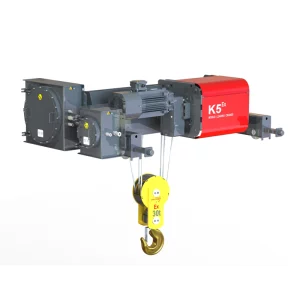
The efficiency of any swing-arm system depends heavily on the performance of the hoist riding along its boom. Mounting a robust wire rope hoist to the cantilever beam provides smooth vertical lifting and precise positioning of heavy parts. These wire-wound units deliver stable lifting performance over long vertical travel heights, making them ideal for multi-level facility tasks.
Using a motorized trolley with the hoisting unit allows for effortless lateral travel along the entire length of the boom. This electric movement reduces manual pulling, which prevents a heavy-duty wire rope hoist from experiencing side-loading forces. We recommend matching the speed and capacity of the wire rope hoist to the specific rotational limits of the support structure.
Tailoring Machinery for Production Lines
Selecting the ideal jib crane for production facility layouts requires analyzing the average weight of materials moved daily. High-volume assembly lines benefit from motorized boom rotation, which speeds up load positioning over fast-moving conveyors. Choosing a dedicated jib crane for production facility use helps workers transition parts between production stages without losing valuable seconds.
Heavier manufacturing sectors like metallurgy or machinery fabrication require thicker structural steel beams to handle constant heavy duty cycles. Integrating a durable jib crane for production facility operations prevents premature wear on the rotational bearings and trolley wheels. At World Hoist, we participate in project discussions through on-site consultation to help partners choose the right equipment configuration.
Safety Systems and Operational Guidelines
Safe operations require operators to keep the load directly under the boom tip before starting any vertical lift. Attempting to drag loads sideways creates dangerous side-pulling forces that can damage the rotational bearings and bend the boom. Training operators to follow strict alignment protocols keeps the lifting machinery working safely and reduces unexpected maintenance downtime.
Installing physical rotation stops prevents the boom from swinging into nearby building structures or high-voltage power lines. These mechanical bumpers limit the travel arc of a wall-mounted jib crane to a safe, designated work zone. Regular checks on the brake assemblies ensure the boom remains stable and does not drift when parked.
Conclusion
Balancing localized assembly requirements with smart structural designs allows manufacturing plants to optimize their floor layouts effectively. Implementing the right lifting configurations helps teams manage heavy parts with high control while keeping work bays safe and clutter-free. At our company, we provide full project consultation and comprehensive training to help your staff master these versatile tools. Selecting durable components supports safe and steady, efficient workflows for the long term.